
Consumer Research Services: Understanding Consumer Choices and Market Needs
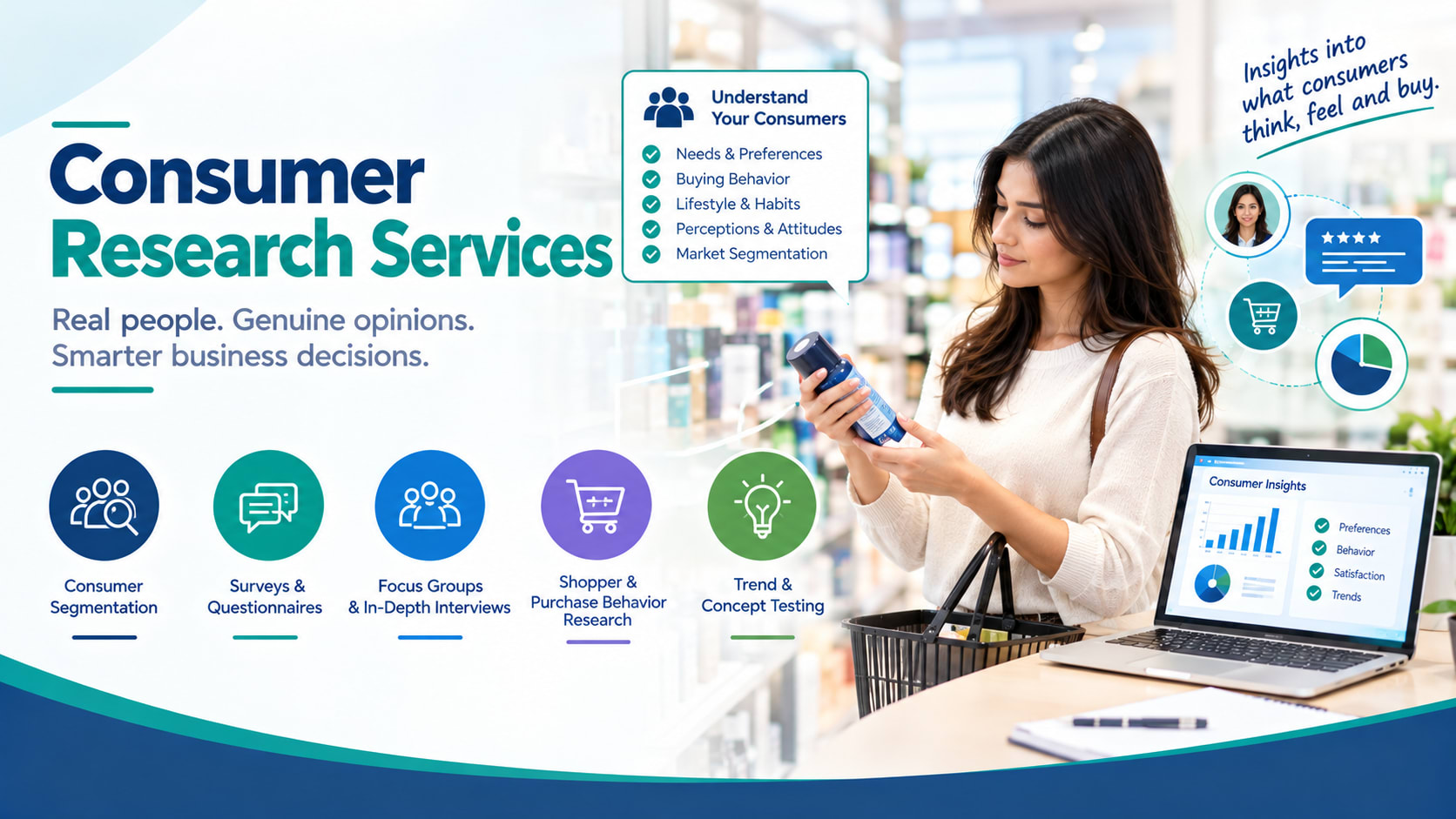
Why do consumers choose one product over another? What influences their preferences, and how do their expectations change over time? For businesses competing in dynamic markets, answering these questions is essential to developing relevant products, communicating effectively, and identifying opportunities for growth. **Consumer Research Services** help organisations understand the people behind purchasing decisions by collecting information about their needs, preferences, attitudes, and behaviours. By examining how consumers evaluate products and services, businesses can make more informed decisions based on firsthand evidence rather than assumptions. ## What Are Consumer Research Services? Consumer research involves systematically gathering information about consumers to understand their preferences, motivations, expectations, and purchasing behaviour. It helps businesses investigate how people discover products, evaluate alternatives, make decisions, and experience their purchases. Depending on the research objectives, studies may involve surveys, in-depth interviews, focus groups, observational research, or other primary research methods. Businesses can use consumer research to answer questions such as: - What motivates consumers to purchase a particular product? - Which product features matter most to the target audience? - How do consumers compare competing brands? - What concerns prevent consumers from trying a new offering? - How do shopping habits and preferences differ across consumer groups? The answers help organisations understand their audiences and identify areas that deserve further investigation. ## Why Is Consumer Market Research Important? **Consumer Market Research** helps businesses understand the preferences and behaviours of the audiences they want to reach. Rather than relying entirely on internal assumptions or general industry information, organisations can collect evidence directly from relevant consumers. ### 1. Understand Changing Consumer Preferences Consumer expectations can change as lifestyles, shopping habits, product availability, and personal priorities evolve. Research helps businesses investigate these changes and understand which preferences are relevant to their target audiences. This information can support decisions about product features, customer communication, and market positioning. ### 2. Evaluate Product Concepts A product idea may appear promising internally but still require validation with potential users. Consumer research can explore reactions to new concepts, packaging, features, and product benefits before businesses commit to wider development or launch activities. Participants' feedback can reveal questions, concerns, and expectations that require further consideration. ### 3. Understand Purchasing Decisions Consumers often evaluate several factors before choosing a product, including price, quality, convenience, familiarity, and perceived value. Research can help businesses explore how these considerations influence different audiences and which factors appear most relevant to the purchasing process. ### 4. Identify Consumer Barriers Consumers may avoid a product because of unclear information, unfamiliar features, pricing concerns, or a mismatch with their needs. By investigating these barriers, businesses can better understand why consumers hesitate and determine which issues warrant further examination. ## Key Areas of Consumer Research Consumer research can address different business questions depending on the product category, target audience, and intended application. ### Consumer Behaviour Research **Consumer Behaviour Research** examines how people discover, evaluate, purchase, and use products or services. It explores the factors influencing these actions, including personal preferences, social influences, previous experiences, and perceptions of value. Businesses can use these findings to investigate shopping habits, product selection, brand preferences, and other aspects of consumer decision-making. ### Consumer Insights Research **Consumer Insights Research** focuses on identifying meaningful patterns and explanations within information collected from consumers. For example, research may reveal that consumers value a particular product feature but struggle to understand how it works. Such findings can help businesses identify opportunities to improve product communication or investigate the feature further. The objective is to move beyond collecting responses and understand what those responses may mean for a specific business question. ### Product and Concept Research Product-focused research explores how consumers perceive existing products or proposed offerings. It may examine product features, packaging, usability, perceived benefits, and areas for improvement. This information can support product development and help organisations understand whether an offering aligns with consumer expectations. ### Brand and Purchase Preference Research Businesses may also investigate how consumers recognise brands, compare alternatives, and form preferences. Research can explore brand associations, perceived differences, purchase considerations, and reasons consumers choose one option over another. These findings can inform further investigation into brand positioning and consumer communication. ## How to Choose a Consumer Research Company Selecting the right **Consumer Research Company** is important for obtaining relevant information from the intended audience. The provider should understand the study objectives and have an appropriate approach to respondent recruitment, data collection, and quality management. Consider the following factors when evaluating potential partners. **Relevant respondent access:** The provider should be able to reach consumers who meet the study's eligibility criteria and reflect the intended audience. **Suitable research methods:** The proposed methodology should match the questions being investigated. Surveys may support structured measurement, while interviews and focus groups can explore opinions in greater depth. **Clear research design:** Research questions and participant criteria should be defined before fieldwork begins to keep the study focused on its objectives. **Fieldwork management:** Consistent procedures help ensure that information is collected according to the agreed research requirements. **Data quality practices:** Appropriate checks can help identify incomplete responses, inconsistencies, and other issues affecting the collected information. **Clear communication:** A suitable provider should explain the research approach, respondent requirements, fieldwork considerations, and project scope clearly. Evaluating these factors helps businesses select a partner whose research processes align with their requirements. ## Consumer Research Agency vs. Consumer Research Firm The terms **Consumer Research Agency** and **Consumer Research Firm** are often used interchangeably. Both may support businesses in gathering and examining consumer information, although their specific services can vary. A consumer research agency may be involved in coordinating research activities, managing project requirements, and arranging data collection for particular audiences. A consumer research firm may focus on delivering research services such as respondent recruitment, fieldwork, interviews, surveys, and related research activities. However, these distinctions are not universal. Businesses should evaluate providers based on their actual capabilities, target audience access, fieldwork processes, and ability to meet the study requirements rather than relying on the label alone. ## The Role of Quantitative and Qualitative Research Consumer research often combines different methods to develop a more complete understanding of consumer preferences and behaviour. ### Quantitative Research Quantitative research collects structured information that can be analysed numerically. Surveys and questionnaires are commonly used to measure preferences, compare audience groups, and identify patterns across responses. This approach is useful when businesses need to quantify particular measures within an appropriately designed sample. ### Qualitative Research Qualitative research explores consumer experiences, attitudes, and motivations through methods such as interviews and focus groups. It helps researchers understand why consumers think or behave in particular ways and provides context that numerical results may not fully explain. ### Combining Both Approaches A business investigating a new product might begin with qualitative interviews to explore consumer expectations and potential concerns. A subsequent quantitative study could measure how common particular preferences are within the intended audience. The appropriate combination depends on the research questions, available resources, and evidence needed to support the business decision. ## How IMARC Pulse Supports Consumer Research IMARC Pulse specialises in primary research and global fieldwork, helping organisations connect with the people who shape their markets. Its services include respondent recruitment, quantitative and qualitative fieldwork, data collection, and research quality services across industries and global markets. These capabilities support organisations seeking firsthand information from relevant audiences. Through structured fieldwork processes and an emphasis on verified data, IMARC Pulse helps businesses collect reliable information to support their research requirements and informed decision-making. ## Conclusion Consumer Research Services help businesses understand the preferences, motivations, and behaviours that influence purchasing decisions. By collecting information directly from relevant audiences, organisations can investigate customer needs, evaluate product concepts, explore brand preferences, and identify questions that require further attention. The effectiveness of consumer research depends on clear objectives, appropriate respondent selection, suitable research methods, and consistent data quality practices. When these elements are aligned, consumer research can provide valuable evidence for product planning, marketing decisions, and a deeper understanding of the people a business aims to serve. ## Frequently Asked Questions ### 1. What are Consumer Research Services used for? Consumer Research Services help businesses understand consumer preferences, purchasing behaviour, product perceptions, and expectations. They can support product development, market assessment, brand research, and customer-focused planning. ### 2. What is Consumer Market Research? Consumer Market Research involves collecting and examining information about consumers to understand their needs, preferences, behaviours, and responses to products or services within a market. ### 3. What is the role of a Consumer Research Company? A Consumer Research Company can support research planning, respondent recruitment, quantitative and qualitative fieldwork, data collection, and research quality activities, depending on the agreed project scope. ### 4. How does Consumer Behaviour Research help businesses? Consumer Behaviour Research helps businesses investigate how consumers discover products, compare alternatives, make purchasing decisions, and use products or services. These findings can inform decisions about product features, communication, and market positioning. ### 5. What is the difference between qualitative and quantitative consumer research? Qualitative research explores consumer opinions and motivations in depth, while quantitative research collects numerical information to measure responses and identify patterns. Both approaches can be combined when the research objectives require detailed explanations and broader measurement. ### 6. How do I choose a Consumer Research Agency? Evaluate the agency's ability to reach relevant respondents, select appropriate research methods, manage fieldwork, maintain data quality, and communicate clearly about the study's objectives and requirements.