
# How Does Dental Crown Treatment Repair Large Cavities?
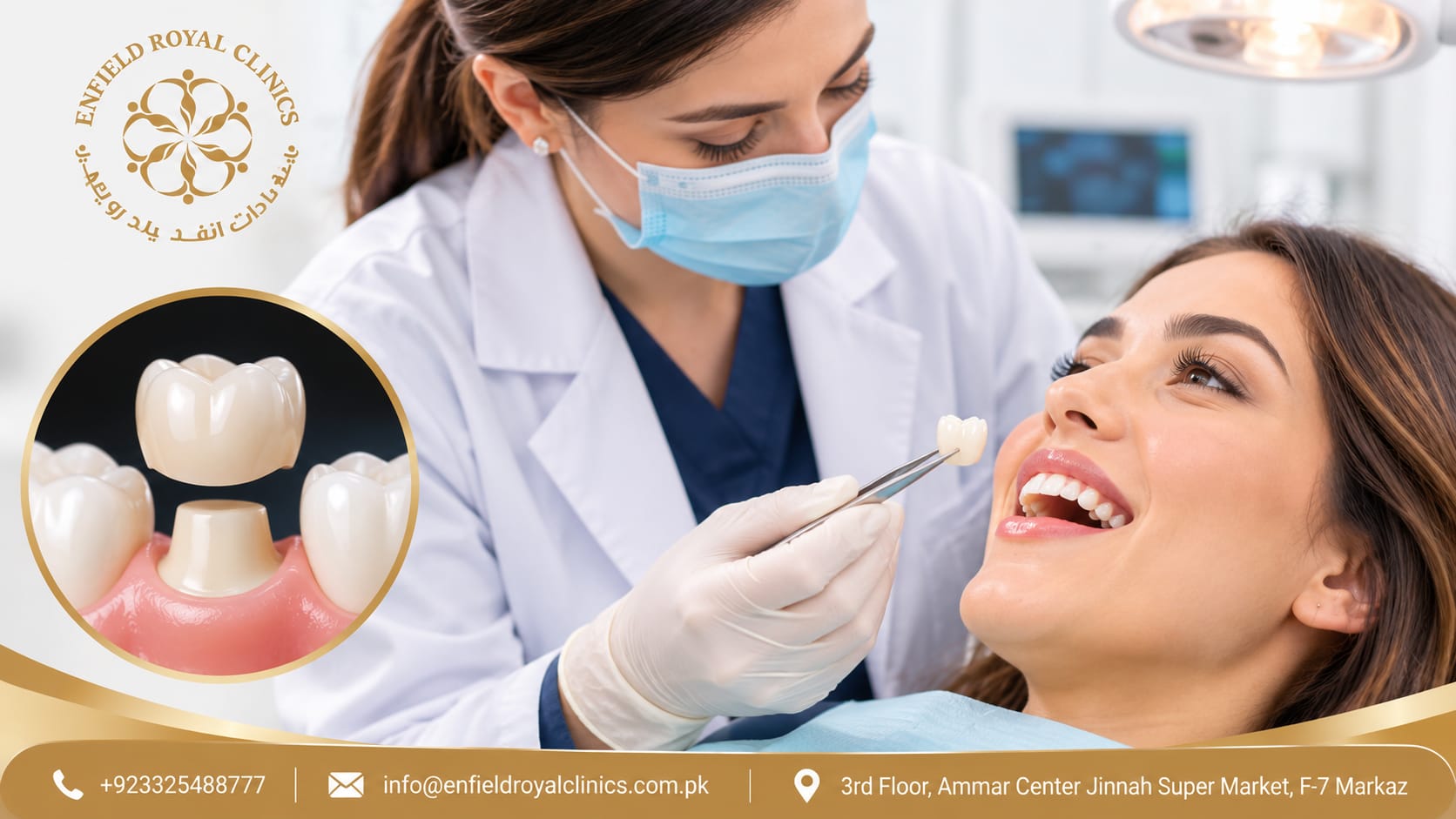
Tooth decay can gradually damage the hard outer layers of a tooth. When a cavity is small, a dental filling may be enough to remove the decayed area and restore the tooth. However, when decay becomes extensive, it can weaken a large portion of the natural tooth structure. In such cases, an ordinary filling may not provide sufficient support, and a dental crown may be considered. A dental crown is a custom-made covering that fits over a prepared tooth. It restores the tooth's shape, protects its remaining structure, and helps bring back normal chewing function. Before placing a crown, the decayed areas must be treated so that the restoration has a healthy foundation. **Dental Crown Treatment in Islamabad** can be an option for patients with large cavities when enough healthy tooth structure remains to support a crown. The treatment depends on the depth of decay, the condition of the tooth, and whether the dental pulp has been affected. ## **1. Why Do Large Cavities Require More Extensive Dental Treatment?** A cavity develops when bacteria in dental plaque produce acids that gradually damage tooth enamel and the underlying dentin. If decay is not treated, it can continue spreading into deeper layers of the tooth. Small cavities can often be repaired with fillings. However, a large cavity may remove a substantial amount of natural structure, leaving the remaining walls weak and vulnerable to fractures. Several signs may indicate that a cavity has become extensive: - A visible hole or dark area in the tooth. - Food frequently becoming trapped in the affected area. - Sensitivity to hot, cold, or sweet foods. - Pain during chewing or biting. - A tooth that has already received a large filling. - A broken or weakened portion of the tooth. Some large cavities cause noticeable discomfort, while others may develop without severe symptoms. The absence of pain does not necessarily mean that the decay is minor. When extensive damage is present, the dentist evaluates whether a filling, inlay, onlay, or full dental crown can provide the most appropriate restoration. The main goal is to remove the decay and preserve as much healthy natural tooth structure as possible. ## **2. How Does a Dental Crown Restore a Tooth With a Large Cavity?** A dental crown restores a tooth by covering its visible portion after the damaged and decayed areas have been treated. It is particularly useful when a large cavity has weakened the remaining tooth structure and a conventional filling may not provide enough support. During treatment, the dentist first removes the decayed tissue and assesses the amount of healthy structure remaining. In some cases, the tooth may need to be rebuilt with a suitable core material before the crown can be placed. The crown is then designed to fit over the prepared tooth. It recreates the tooth's shape and chewing surface while covering vulnerable areas. This restoration can provide several benefits: - Covers and supports weakened tooth structure. - Restores the natural shape of the damaged tooth. - Helps distribute normal chewing pressure. - Reduces the risk of certain further fractures. - Improves the appearance of a tooth affected by extensive decay. For patients considering Dental Crown Treatment in Islamabad, this full-coverage approach may be valuable when a large cavity has left insufficient healthy structure for an ordinary filling. However, a crown does not remove decay by itself. The dentist must first clean and treat the affected tooth. A crown also cannot save every badly damaged tooth, particularly when the fracture extends deeply into the root or the remaining structure is insufficient. ## **3. What Happens if a Large Cavity Reaches the Dental Pulp?** The dental pulp is the soft tissue inside a tooth that contains nerves and blood vessels. When deep decay reaches or severely affects the pulp, the tooth may develop inflammation or infection. In such situations, placing a crown alone may not address the underlying problem. Additional treatment may be necessary before the final restoration is fitted. Possible symptoms of deeper pulp involvement include: - Persistent or spontaneous toothache. - Pain that continues after hot or cold exposure. - Discomfort that becomes worse at night. - Pain when biting or applying pressure. - Swelling around the affected tooth or gums. These symptoms do not confirm a diagnosis on their own. A dental examination and, when necessary, X-rays help determine the extent of the problem. If the pulp is irreversibly inflamed or infected, root canal treatment may be recommended when the tooth is restorable. This procedure removes the affected pulp tissue, cleans the internal canals, and seals them. Afterward, a crown may be recommended, particularly for molars that have lost substantial tooth structure. The restoration helps protect the remaining tooth during normal chewing. Not every deep cavity requires root canal treatment. In selected cases, other pulp-preserving treatments may be possible depending on the tooth's condition and the extent of inflammation. ## **4. Which Dental Crown Materials Are Suitable for Teeth With Large Cavities?** The choice of crown material is important because a restored tooth must withstand everyday chewing while meeting the patient's appearance requirements. Different materials offer different combinations of strength, durability, and aesthetics. Common options include: **Zirconia Crowns:** Zirconia is known for its strength and may be suitable for back teeth that experience considerable chewing pressure. Different varieties also offer tooth-coloured appearances. **Porcelain Crowns:** Porcelain can provide natural-looking results and may be considered for visible teeth. Its suitability depends on the tooth's location and functional requirements. **Lithium Disilicate Crowns:** This ceramic material offers a combination of strength and aesthetics. It may be suitable for selected front and back teeth when the clinical conditions allow. **Porcelain-Fused-to-Metal Crowns:** These crowns combine a metal framework with a porcelain outer layer. They provide structural support and a tooth-coloured surface, although the porcelain can sometimes chip. **Metal Crowns:** Certain dental metal alloys are durable and may be suitable for molars where chewing strength is a priority and metallic appearance is acceptable. The dentist considers the position of the tooth, the amount of remaining structure, bite pressure, and cosmetic expectations before recommending a material. No single crown type is ideal for every large cavity. ## **5. What Are the Steps Involved in Dental Crown Treatment?** The treatment process usually begins with a consultation and examination. The dentist checks the affected tooth, surrounding gums, and bite to determine whether the tooth can be restored. Dental X-rays may be recommended to assess the depth of decay, root condition, and surrounding bone. Any infection or gum problem may need treatment before the permanent crown is placed. If a crown is appropriate, the main steps generally include: **Removing Decay:** The decayed portions of the tooth are carefully removed. The remaining structure is then assessed to determine whether it can support a crown. **Preparing the Tooth:** The tooth is reshaped to create enough space for the restoration. Local anaesthesia is generally used to keep this stage comfortable. **Taking an Impression or Digital Scan:** The prepared tooth is recorded so that a custom crown can be designed to match its shape and bite. **Placing a Temporary Crown:** In traditional treatment, a temporary covering may protect the prepared tooth while the permanent crown is manufactured. **Fitting the Permanent Crown:** At the final appointment, the dentist checks the crown's fit, shape, contact with neighbouring teeth, and bite alignment before securing it. Some suitable cases can be completed in one visit using digital dental technology, while many laboratory-made crowns require multiple appointments. ## **6. How Can Patients Protect a Tooth After Crown Placement?** A dental crown can restore a tooth weakened by a large cavity, but regular care remains essential. The crown material itself does not develop cavities, yet the natural tooth around and beneath its margins can still decay. Patients should maintain good oral hygiene to protect both the restoration and surrounding teeth. Helpful habits include: - Brushing twice daily with fluoride toothpaste. - Cleaning between teeth every day. - Limiting frequent sugary snacks and drinks. - Avoiding chewing ice and very hard objects. - Attending regular dental check-ups. - Managing teeth grinding or clenching with professional guidance. Patients may experience mild temporary sensitivity or gum tenderness after crown placement. However, persistent pain, swelling, discomfort while biting, or a loose crown should be assessed by a dental professional. Many dental crowns last around 5 to 15 years or longer, although their lifespan depends on material, fit, oral hygiene, and chewing habits. Regular dental examinations help identify problems early. For individuals considering Dental Crown Treatment in Islamabad, the most important step is choosing a restoration based on the actual condition of the tooth. A crown can provide valuable protection when a large cavity has weakened the tooth, but more conservative treatments may be suitable when enough healthy structure remains. ## **Frequently Asked Questions** **1. Can a dental crown repair a very large cavity?** Yes. A crown can restore a tooth after the decayed areas have been removed, particularly when extensive damage has weakened the remaining structure. The tooth must have enough healthy structure to support the restoration. **2. Is a dental filling enough for a large cavity?** Sometimes, but not always. A filling may be suitable when enough healthy tooth structure remains. A crown or another indirect restoration may be recommended when the tooth is too weak for an ordinary filling. **3. Does a large cavity always require root canal treatment?** No. Root canal treatment is generally considered when the dental pulp is irreversibly inflamed or infected. Some deep cavities can be managed with other treatments depending on the pulp's condition. **4. Can a dental crown save a tooth with extensive decay?** A crown may help preserve a tooth when the decay can be removed and enough healthy structure remains for restoration. Severely fractured or unrestorable teeth may require extraction or another treatment. **5. Is dental crown treatment painful?** Local anaesthesia is generally used during tooth preparation to keep the procedure comfortable. Mild temporary sensitivity or gum tenderness may occur afterward. **6. How long does a crown last after treating a large cavity?** Many dental crowns last around 5 to 15 years or longer. Their lifespan depends on material, fitting quality, oral hygiene, bite pressure, and regular dental maintenance. ## **Meta Description** Learn how dental crown treatment in Islamabad repairs large cavities, restores weakened teeth, protects remaining structure, and improves chewing function. https://www.enfieldroyalclinics.com.pk/dental-clinic-islamabad/dental-crown-treatment/