
Research Impact Services: A Practical Guide to Research Impact Assessment and Evaluation
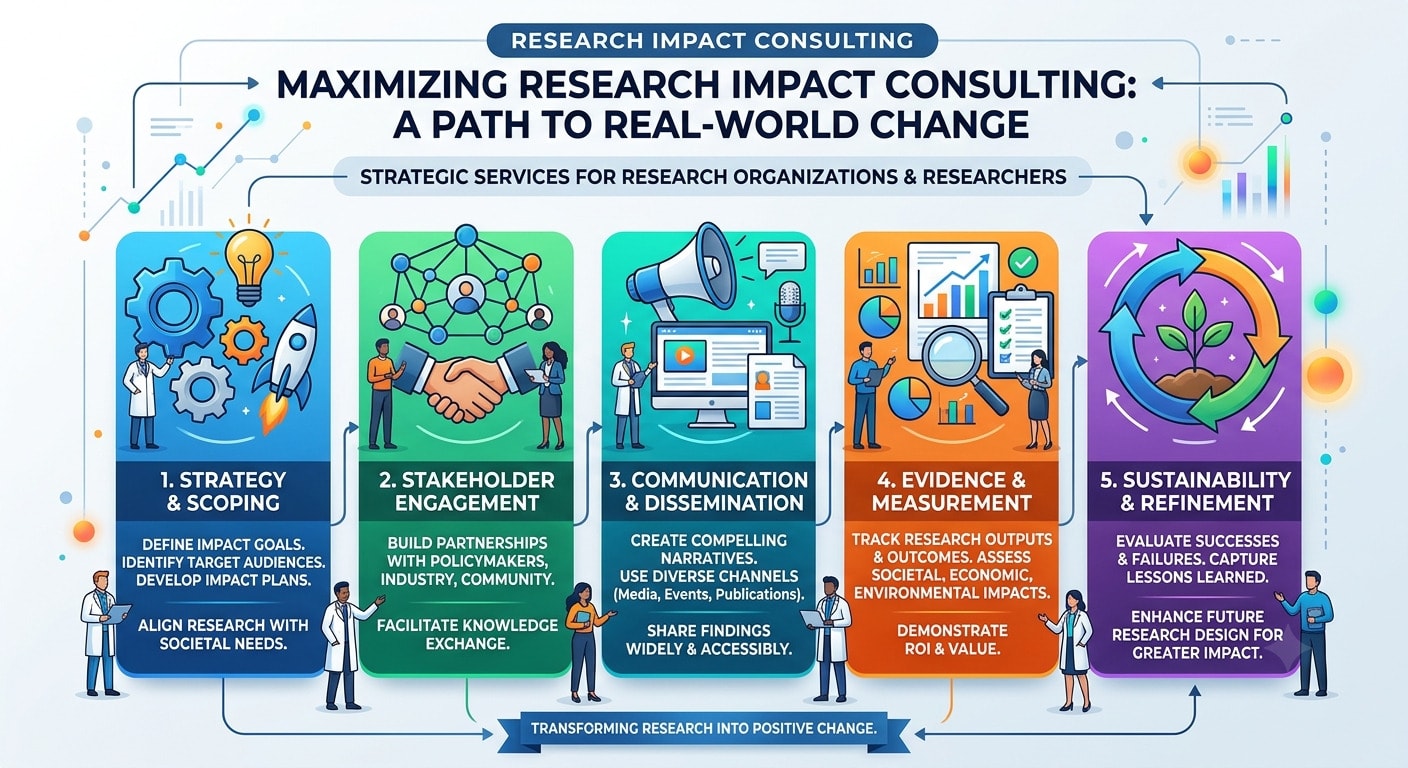
Research can lead to important discoveries, new ideas, and better ways of solving problems. But how do we know whether a research project is making a real difference? Publishing a paper is one achievement, but understanding how research influences people, organizations, policies, or communities is another. This is where research impact services become useful. They help researchers and institutions understand, document, and communicate the changes that result from their work. Whether you're working at a university, managing a research project, or studying how evidence influences public decisions, understanding research impact can help you see the bigger picture. In this guide, we'll explain what research impact services involve, how research impact assessment works, which methods are commonly used, and how researchers can identify and measure the outcomes of their work. What Are Research Impact Services? Research impact services cover activities that help researchers and organizations understand the value and influence of their research beyond academic publications. These services may include impact planning, evidence collection, outcome measurement, stakeholder consultation, data analysis, and the preparation of impact reports. For example, a university research team might study ways to improve access to clean drinking water. The research could influence local policies, help community organizations improve their programs, or support better public health practices. Research impact services help document these changes and explain how the research contributed to them. Common activities include: Identifying the potential impact of a research project. Developing plans to track outcomes. Collecting evidence from different sources. Assessing changes in policy, practice, or public understanding. Communicating research findings to relevant audiences. Preparing reports for funders and research institutions. The exact activities depend on the research topic, project goals, available evidence, and intended audience. Why Are Research Impact Services Important? Research takes time, funding, and collaboration. Understanding its wider effects helps researchers explain what their work contributes and identify opportunities for future improvement. 1. Demonstrating the Value of Research Research impact services help researchers explain how their findings may be useful outside academic settings. For example, a study about workplace safety might help an organization review its training procedures. Evidence showing that the recommendations were adopted can help demonstrate the practical value of the research. 2. Supporting Funding Decisions Research funders often want to understand what their investment has achieved or may achieve in the future. Clear impact evidence can help them assess whether a project has addressed its objectives, reached relevant audiences, or contributed to meaningful changes. However, impact evidence is only one factor in funding decisions, and different funders may use different assessment criteria. 3. Improving Future Research Impact evaluation can reveal which approaches worked well, which audiences benefited, and where additional research is needed. Researchers can use these findings to improve project design, communication, and collaboration in future studies. 4. Strengthening Public Engagement Research findings can be difficult for people outside a specialist field to understand. Sharing results through clear reports, public presentations, and community discussions helps make research more accessible. This can also create opportunities for feedback and further collaboration. What Is Research Impact Assessment? Research impact assessment is the process of examining the effects of research and gathering evidence to understand the changes associated with it. It considers more than the number of papers published or citations received. Depending on the project, it may examine changes in professional practice, public policy, technology, environmental conditions, or community well-being. For example, a research project may develop a new method for reducing food waste. An assessment could examine whether businesses adopted the method, how much waste was reduced, and what evidence supports those findings. A useful research impact assessment usually considers three questions: What changed after the research was carried out? What evidence supports the reported change? What role did the research play in producing that change? These questions help researchers distinguish between activities, immediate outputs, and wider outcomes. Key Types of Research Impact Research can influence different parts of society. Understanding these categories makes it easier to decide what evidence to collect. Academic Impact Academic impact refers to the influence research has on further research and scholarly understanding. Possible indicators include citations, new research methods, follow-up studies, and contributions to a field of knowledge. Economic Impact Economic impact involves changes in business activity, productivity, employment, or financial performance that are linked to research. For example, research may help develop a manufacturing process that reduces production costs or improves product quality. Social Impact Social impact relates to changes in people's lives, access to services, behavior, or community conditions. Research on education, public health, and social care may contribute to improvements in these areas. Policy Impact Research can inform government decisions, public guidelines, regulatory approaches, and institutional policies. Evidence of policy impact may include references to research in official documents, changes to guidelines, or documented use of findings in decision-making. Environmental Impact Environmental research may influence conservation practices, energy use, pollution control, or resource management. Assessment may involve measuring changes in emissions, resource consumption, biodiversity, or environmental practices. These categories can overlap. A single research project may produce academic findings while also influencing policy and professional practice. How Research Impact Services Work The process generally involves several connected stages. Each stage helps researchers move from broad goals to evidence-based reporting. Step 1: Define the Intended Impact Start by deciding what changes the research is expected to support. These changes should relate to the project's objectives and the needs of the people or organizations it may affect. Step 2: Identify Stakeholders Stakeholders may include researchers, policymakers, industry professionals, community groups, service providers, and members of the public. Understanding their interests helps determine which outcomes matter and how evidence should be collected. Step 3: Develop an Impact Plan An impact plan describes the expected changes, the activities intended to support them, and the methods that will be used to track progress. It may also identify responsibilities, timelines, possible risks, and evidence sources. Step 4: Collect Relevant Evidence Evidence can come from surveys, interviews, policy documents, administrative records, case studies, published research, and stakeholder feedback. Using more than one source can provide a clearer understanding of what happened and why. Step 5: Analyze and Report Findings The final stage involves examining the evidence, explaining the results, and identifying the research's contribution. A good report should distinguish between confirmed changes, possible future benefits, and outcomes that cannot yet be established. Methods Used in Research Impact Assessment Different projects require different assessment methods. The right choice depends on the research question, available resources, and type of impact being studied. Surveys: Collect information about awareness, experiences, or changes in behavior. Interviews: Provide detailed accounts of how research findings have been used. Case studies: Explain how research contributed to a particular change in a real setting. Document analysis: Identifies references to research in policies, reports, guidelines, or professional materials. Quantitative analysis: Examines numerical indicators such as adoption rates, costs, or service outcomes. Qualitative analysis: Explores experiences, reasons, and changes that cannot be fully described through numbers alone. Combining qualitative and quantitative methods can provide a more complete picture of research impact. Common Challenges in Measuring Research Impact Research impact is not always easy to measure. Some changes happen quickly, while others take years to become visible. One common challenge is attribution. A policy change or improvement in public health may result from several factors, not research alone. Researchers should explain their contribution carefully rather than claiming sole responsibility. Another challenge is limited evidence. Records may be incomplete, stakeholders may be difficult to reach, or the effects of research may not have been tracked from the beginning. Researchers can address these issues by: Planning impact measurement early. Keeping clear records of research activities and outcomes. Gathering feedback from relevant stakeholders. Using multiple sources to check important findings. Acknowledging limitations and uncertainty. Reviewing outcomes over an appropriate period. A balanced assessment is more useful than a report that makes strong claims without enough evidence. Frequently Asked Questions 1. What are research impact services? Research impact services help researchers and institutions understand, measure, and communicate the effects of their work. They may include impact planning, evidence collection, evaluation, and reporting. 2. What is research impact assessment? Research impact assessment examines the changes associated with research and evaluates the evidence supporting those changes. It can cover academic, economic, social, policy, and environmental outcomes. 3. How is research impact measured? Researchers use methods such as surveys, interviews, case studies, document analysis, and numerical indicators. The methods should match the research objectives and the type of impact being evaluated. 4. Why is research impact important for universities? Research impact helps universities explain how their work contributes to knowledge, professional practice, and society. It can also support accountability, collaboration, and future research planning. 5. When should researchers plan for impact assessment? Researchers should consider impact assessment during the early planning stages of a project. Early planning makes it easier to identify useful indicators, collect relevant evidence, and monitor changes over time. Conclusion Research impact services help researchers understand what happens when their findings move beyond academic publications and begin influencing decisions, practices, or communities. Through research impact assessment, researchers can collect evidence, examine outcomes, understand their contribution, and communicate results clearly. The process also helps identify limitations and opportunities for further work. research impact services