
What Is the Difference Between Remote Work Monitoring and Time Tracking?
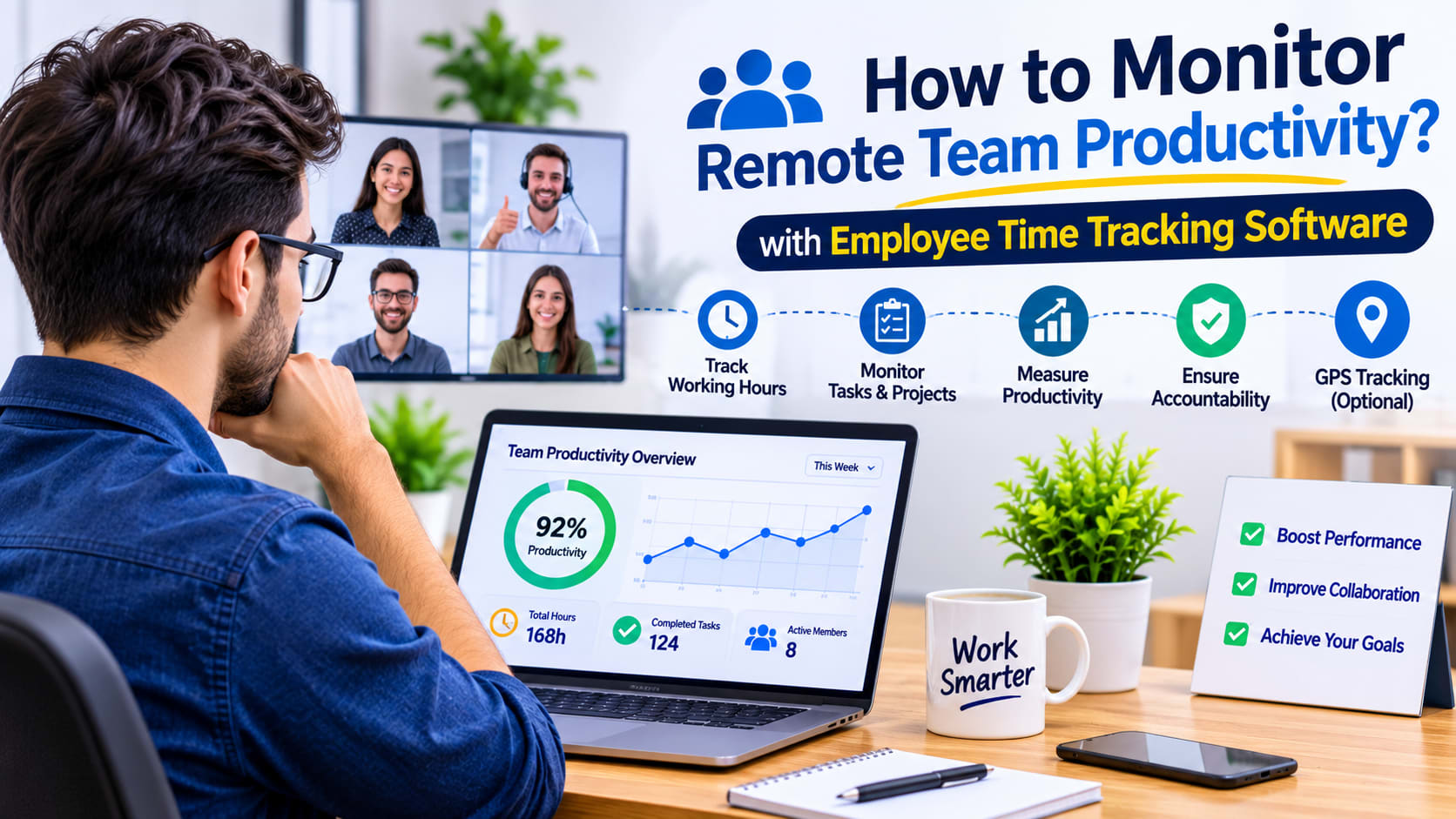
Remote work has become a common working arrangement for businesses worldwide. As more companies adopt remote and hybrid work models, managers need effective ways to understand employee performance, manage working hours, and maintain accountability. Two commonly used approaches are remote work monitoring and employee time tracking. Although these practices are related, they serve different purposes. Remote work monitoring focuses on understanding employee work activities and productivity, while time tracking primarily records how much time employees spend working on tasks and projects. Understanding the difference between these approaches helps businesses choose the right workforce management strategies and create a more productive remote working environment.
What Is Remote Work Monitoring?
Remote work monitoring is the process of observing and evaluating employees' work activities, performance, and productivity while they work outside a traditional office. Businesses use monitoring tools to gain insights into how employees perform their responsibilities, manage assignments, and collaborate with team members. Common remote work monitoring activities include: Reviewing task completion and project progress. Monitoring application and website usage when appropriate. Evaluating employee productivity trends. Reviewing work-related activity reports. Measuring performance against established goals. Identifying workflow challenges and inefficiencies. The primary purpose of remote work monitoring is to understand how work is performed and identify opportunities to improve employee and team performance.
What Is Employee Time Tracking?
Remote work monitoring and time tracking are two different approaches to managing remote employees. Remote work monitoring focuses on understanding employee activities, productivity, task progress, and overall work performance. In contrast, time tracking focuses on recording working hours, attendance, breaks, and the time spent on specific projects. Both approaches help businesses improve workforce management, but they serve different purposes. Key differences include: - Purpose: Remote work monitoring evaluates employee activities and productivity, while time tracking records working hours and attendance. - Main Focus: Monitoring focuses on how employees perform their work, whereas time tracking measures how much time they spend working. - Data Collection: Monitoring may collect task progress, application usage, and performance information, while time tracking records clock-in times, clock-out times, and breaks. - Productivity Measurement: Remote work monitoring helps evaluate work patterns and performance, while time tracking shows how employees allocate their working hours. - Project Management: Monitoring provides insights into project activities and task completion, whereas time tracking records the time spent on individual projects. - Reporting: Monitoring generates activity and performance reports, while time tracking provides attendance, timesheet, and working-hour reports. - Business Benefits: Remote work monitoring helps improve productivity and workflow efficiency, while time tracking supports accurate attendance management, payroll processing, and time management. Using both approaches together can help businesses maintain accurate work records, understand employee performance, and manage remote teams more effectively.
5 Major Differences Between Remote Work Monitoring and Time Tracking
1. Purpose and Objectives Remote work monitoring aims to understand employee performance, work activities, and productivity. It helps managers identify workflow problems and evaluate whether employees are meeting their responsibilities. Time tracking has a more specific objective: recording working hours. It helps businesses understand how much time employees spend on particular tasks, projects, or daily responsibilities. 2. Type of Information Collected Remote work monitoring may collect information about application usage, task progress, project activities, and performance trends, depending on the tools and policies used. Time tracking primarily collects information about working hours, attendance, breaks, and project time allocation. 3. Productivity Measurement Remote work monitoring can help managers evaluate productivity by reviewing task completion, work quality, project progress, and other relevant performance indicators. Time tracking provides information about the time employees spend working. However, longer working hours do not necessarily mean higher productivity. For this reason, businesses should consider both working time and actual work outcomes when evaluating performance. 4. Reporting and Analysis Remote work monitoring reports provide insights into employee activities, productivity patterns, and workflow efficiency. Time tracking reports focus on attendance records, working hours, overtime, and timesheet information. Both reporting methods help managers make informed decisions about employee performance and workforce planning. 5. Employee Privacy and Transparency Remote work monitoring may involve collecting more detailed information about employee activities. Therefore, businesses should establish clear monitoring policies and explain what information is collected and why. Time tracking generally involves recording working hours and attendance, making its scope more limited. Regardless of the approach, employers should respect employee privacy, follow applicable laws, and communicate monitoring practices transparently. Can Remote Work Monitoring and Time Tracking Work Together? Yes. Remote work monitoring and time tracking can work together to provide a more complete understanding of remote workforce performance. For example, time tracking can show how many hours an employee spends working on a project, while remote work monitoring can help managers understand task progress and work-related activities. Combining these approaches can help businesses: Maintain accurate attendance records. Understand employee work patterns. Monitor project progress. Improve workload distribution. Identify workflow inefficiencies. Evaluate performance using meaningful metrics. Support better workforce planning. However, businesses should avoid excessive monitoring and focus on information that genuinely supports productivity and operational goals. Which Is Better for Remote Teams: Monitoring or Time Tracking? Neither approach is universally better because each serves a different purpose. Time tracking is more suitable for businesses that need accurate working-hour records, attendance management, timesheet preparation, and payroll support. Remote work monitoring is useful for organizations that want to evaluate work activities, understand productivity trends, and improve project performance. For many remote and hybrid businesses, combining both approaches provides greater visibility into workforce operations. The right solution depends on business objectives, employee responsibilities, privacy requirements, and management needs. time tracking
Frequently Asked Questions (FAQs)
1. Is remote work monitoring the same as time tracking? No. Remote work monitoring focuses on employee work activities, productivity, and performance, while time tracking records working hours, attendance, and time spent on tasks. 2. Why is time tracking important for remote employees? Time tracking helps businesses maintain accurate working-hour records, manage attendance, prepare timesheets, allocate project hours, and support payroll processes. 3. Does remote work monitoring measure employee productivity? Yes. Remote work monitoring can help evaluate productivity through task completion, project progress, work quality, and relevant performance indicators. 4. Can time tracking software monitor employee activities? Some time tracking solutions include additional monitoring features, such as application usage, activity reports, and screenshot tracking. However, these capabilities depend on the software and its configuration. 5. Which approach is better for managing remote employees? Time tracking is useful for managing working hours and attendance, while remote work monitoring provides insights into work activities and performance. Businesses can combine both approaches to support effective remote workforce management.
Conclusion
Remote work monitoring and time tracking are two important but different approaches to managing distributed teams. Remote work monitoring helps businesses understand employee activities and evaluate performance, while time tracking focuses on recording working hours and managing attendance. By understanding their differences, businesses can select appropriate tools, establish transparent workplace policies, and improve workforce efficiency. Combining both approaches can create a balanced remote work environment where employees remain accountable while managers gain the information needed to make better decisions.