
Why Your Online IQ Score Might Be Higher or Lower Than Expected
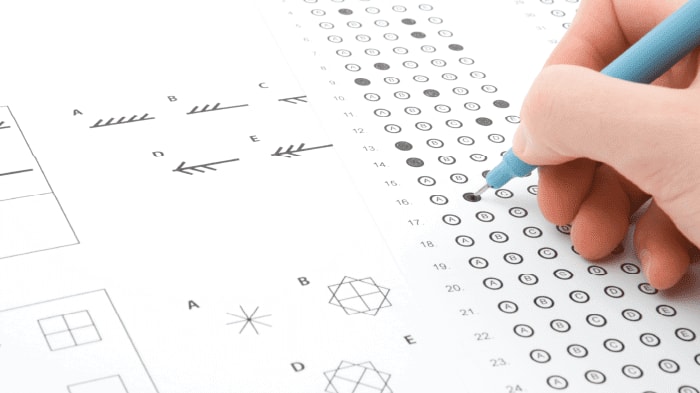
Have you ever taken an online IQ test and received a score that surprised you? Perhaps the result was higher than you expected, making you wonder whether you are smarter than you thought. Alternatively, you may have received a lower score and started questioning your intellectual abilities. Before drawing conclusions, it is important to understand that online IQ scores can be influenced by several factors, including test design, concentration, time limits, and the conditions under which you take the test. Online IQ tests have become increasingly popular because they are convenient, accessible, and often free. They promise to measure intelligence through puzzles, logical reasoning questions, pattern recognition exercises, and numerical problems. However, not every online test follows scientifically established assessment methods. Understanding why your score might be higher or lower than expected can help you interpret your results more realistically. It can also explain the difference between a quick online quiz and a professionally administered intelligence assessment. 1. Not All Online IQ Tests Measure Intelligence the Same Way One of the biggest reasons for unexpected results is the quality of the test itself. Online IQ tests vary significantly in their design, difficulty, scoring systems, and scientific validity. Some tests are created using established principles of psychological assessment. Others are designed primarily for entertainment or website engagement. Although both types may display an IQ score at the end, their results may not have the same meaning. A well-designed intelligence test typically measures several cognitive abilities, such as verbal comprehension, working memory, processing speed, and fluid reasoning. Many online quizzes focus on only one or two areas, particularly visual patterns and logical puzzles. If you perform well on pattern recognition tasks, an online test that emphasizes these questions may give you a higher score than a broader assessment would. Conversely, a test that relies heavily on vocabulary or numerical reasoning could produce a lower result if those areas are not your strongest. This is why it is essential to consider what a test actually measures before interpreting its final score as a complete representation of your intelligence. 2. Time Pressure Can Lower Your Score Many online IQ tests include strict time limits. You might have only a few seconds to solve each question, identify a pattern, or select the correct answer. While time limits can help measure processing speed, they can also affect performance in ways that are unrelated to your overall reasoning ability. For example, you might understand a difficult puzzle but struggle to solve it quickly enough. Another person may recognize familiar patterns faster, even if both individuals could reach the correct answer given sufficient time. Anxiety can make the situation more challenging. When you know the clock is running, you may become distracted by the fear of running out of time. This can interfere with concentration and lead to avoidable mistakes. If your online IQ score is lower than expected, consider whether the test's time limit affected your performance. However, remember that speed is sometimes an intentional part of standardized cognitive assessments, so removing time pressure does not automatically make a test more accurate. 3. Your Environment Can Influence Your Performance The circumstances in which you take an online IQ test can have a noticeable impact on your results. Imagine completing a test in a quiet room after a good night's sleep. Now compare that experience with taking the same test while feeling tired, checking notifications, or dealing with interruptions. Your performance may differ considerably. Concentration is especially important for questions that require you to remember information, compare multiple possibilities, or recognize complicated patterns. Even small distractions can cause you to overlook important details. Other factors that may affect your results include hunger, stress, mental fatigue, and the time of day. If you are exhausted after a long day, you may find it harder to maintain attention or process information efficiently. To obtain a more representative result, take an online test when you feel rested and alert. Choose a quiet environment, silence notifications, and give yourself enough uninterrupted time to complete the assessment. These steps cannot turn an unreliable test into a scientifically valid one, but they can reduce some avoidable sources of variation. 4. Familiarity With Puzzles Can Lead to Higher Scores Have you spent time solving logic puzzles, playing strategy games, completing brain-training exercises, or practicing IQ questions online? If so, your experience may help explain why your score is higher than expected. Many online IQ tests use recurring question formats. These include number sequences, geometric patterns, shape rotations, and visual matrices. Once you become familiar with these formats, you may recognize the underlying rules more quickly. For instance, you might learn to look for alternating shapes, changing angles, or numerical relationships. With practice, these strategies can make certain questions easier to solve. A higher score may therefore reflect a combination of reasoning ability, familiarity with the test format, and practice. This does not mean that your result is meaningless. Practice can improve genuine problem-solving skills. However, familiarity with particular questions may inflate performance on tests that use similar exercises. For a more dependable assessment, avoid repeatedly taking the same quiz and treating each new score as an independent measurement of your intelligence. 5. Some Online IQ Tests Use Misleading Scoring Systems Another reason your score might seem unusually high or low is the way the test converts correct answers into an IQ number. In professionally developed intelligence assessments, scores are generally interpreted using standardized procedures and comparisons with an appropriate reference group. Many traditional IQ scales use a mean of 100 and a standard deviation of 15, although specific tests and scoring systems can differ. This means that an IQ score is not simply a percentage of questions answered correctly. It represents performance relative to a defined comparison group under particular testing conditions. Some online tests do not explain how their scores are calculated. They may assign impressive numbers based on a small collection of questions without providing evidence that the results correspond to a properly standardized IQ scale. For example, a website might report an IQ of 135 after a short puzzle quiz. Without information about the test's reliability, validation, and comparison sample, it is difficult to know what that number actually means. Be cautious of tests that promise extremely precise results without explaining their methodology. A score presented with several decimal places is not necessarily more accurate than a rounded estimate. 6. Language and Cultural Differences Can Affect Results Language is another important factor that can influence online IQ test performance. Some assessments rely on vocabulary, reading comprehension, verbal analogies, or questions involving culturally specific knowledge. If the language used in the test is not your strongest language, you may misunderstand a question even when you have the reasoning ability needed to answer it. Cultural familiarity can also matter. Certain questions may include references, symbols, or conventions that are more familiar to some groups than others. Nonverbal reasoning tests can reduce the influence of language in some situations, but they do not automatically eliminate every cultural or educational influence. A fair assessment should be appropriate for the person taking it and should use suitable norms for interpreting performance. If an online test does not explain whether it has been validated for people with different linguistic or cultural backgrounds, its results should be interpreted cautiously. 7. Expectations and Test Anxiety Can Shape Your Results Your mindset can influence how you approach an IQ test. If you believe you are naturally good at logical reasoning, you may approach questions with confidence and persist when a problem becomes difficult. If you are worried about performing poorly, you may second-guess correct answers or become distracted by negative thoughts. Test anxiety can interfere with working memory and attention, particularly when a person feels under pressure to demonstrate intelligence. Expectations can also affect how you interpret the final result. Someone who receives a score of 110 might feel disappointed if they expected 130, even though the number alone cannot tell them everything about their cognitive strengths. Likewise, someone who receives an unexpectedly high score might assume it proves exceptional intelligence without considering the quality of the assessment. The best approach is to view an online score as information about one testing experience, not as a judgment of your personal worth or potential. 8. So, How Accurate Are Online IQ Tests? The answer depends on the specific test. how accurate are online iq tests Some provide useful practice with reasoning questions or a rough indication of performance on particular cognitive tasks. However, many free online quizzes have not been validated sufficiently to support precise conclusions about a person's IQ. Accuracy depends on several factors, including the quality of the questions, the reliability of the scoring system, the size and suitability of the comparison sample, and the consistency of results across repeated assessments. A scientifically developed test should provide evidence that it measures what it claims to measure. It should also explain how scores are interpreted and what limitations apply. By comparison, an online quiz that offers a score after only a handful of questions may not provide enough information to estimate intelligence reliably. Professional intelligence assessments are generally more comprehensive and use standardized administration and interpretation procedures. A qualified psychologist can select an appropriate assessment, explain the results, and consider relevant factors such as educational background and language. If you need an IQ assessment for educational planning, clinical evaluation, or another important purpose, a professionally administered test is a more appropriate option than a random online quiz. 9. How to Get a More Meaningful Online IQ Test Result Although no simple online quiz can guarantee an accurate IQ score, you can take several practical steps to make your experience more informative. Choose a reputable test. Look for information about its development, validation, scoring methods, and limitations. Take the test when rested. Fatigue and poor concentration can interfere with performance. Minimize distractions. Use a quiet environment and avoid multitasking. Follow the instructions carefully. Make sure you understand whether questions are timed and whether calculators or other tools are permitted. Avoid excessive practice on identical questions. Repeated exposure can make results less representative of your independent performance. Interpret the result cautiously. Consider your score alongside the test's limitations rather than treating it as a definitive measurement. Seek professional assessment when necessary. A qualified psychologist can provide a more comprehensive evaluation if you need a dependable estimate of your cognitive abilities. These steps help you distinguish between a potentially useful assessment experience and a number that may have little scientific meaning. Conclusion Your online IQ score might be higher or lower than expected for many reasons, ranging from test quality and time pressure to familiarity with puzzles, concentration, language, and scoring methods. A high result does not automatically prove exceptional intelligence, just as a low result does not establish that you have limited intellectual ability. The meaning of any score depends on how the test was designed, how it was administered, and how the results were interpreted. When asking, "How accurate are online IQ tests?" it is important to remember that accuracy varies considerably between assessments. Some can offer useful reasoning practice, while others provide numbers that should not be treated as scientifically established IQ scores. Ultimately, intelligence is complex, and a single online quiz cannot capture every aspect of how you learn, reason, solve problems, or adapt to new situations. Use online results as a starting point for curiosity rather than a final verdict on your abilities. If you need a reliable assessment, choose a validated test administered and interpreted by a qualified professional. how accurate are online iq tests